

Think about the last time you scrolled past a local bakery’s Instagram and thought, I could do better than this.
Maybe you’ve been running a neighborhood Facebook group for months. Or managing the school PTA page. Or keeping a mom community active with posts, polls, and pinned updates — because nobody else would do it.
Nobody paid you for that. You just did it because it needed doing. Here’s the thing: that’s literally the job.
Social media management is one of the most in-demand beginner freelance services right now. And you’re probably already doing the core of it — just not for clients, and not for money.That’s about to change.
I’ve spent time navigating freelancing platforms as a mom with no formal background, and the one service that came up again and again for beginners — especially moms — was this one.

Not because it’s glamorous. Because it’s doable, it pays consistently, and small businesses are desperate for it.
Here’s exactly what you need to know to get started.
What to Charge
This is the number one question — and the number one thing new freelancers get wrong.
Most beginners either guess too low (and burn out working for $5 an hour without realising it) or
freeze because they don’t know where to start.
So here’s a concrete starting point.
For a basic social media management package — 3 to 5 posts per week on one or two platforms — beginners typically charge between $200 and $400 per month per client. That’s not per hour. That’s a flat monthly retainer.
Why a retainer instead of hourly? Because it gives you predictable income, and it gives the client a clear budget. Everyone wins.
If hourly feels more comfortable to start, $15–$25 is a realistic beginner range. But move to retainers as soon as you can. A retainer doesn’t punish you for getting faster. It fits around school pickup. And it means you know what’s coming in this month — which matters when you’re just starting out.
One strategy that works: offer your very first client a trial month at a reduced rate — say, $150 — in exchange for a testimonial at the end. That testimonial is worth more than the rate difference.
What to Promise
This is where new freelancers get into trouble.
They say yes to everything in the pitch, then panic when the client asks for things they haven’t figured out yet.
Keep your first package simple. Promise exactly this — and nothing more:
3–5 posts per week on 1–2 platforms (start with Instagram or Facebook, not both if you’re brand new)
Captions written in the client’s voice
Simple graphics made in Canva (free, and genuinely learnable in a weekend)
Content scheduled using a free tool like Buffer or Meta’s built-in scheduler
A basic monthly summary — even just a screenshot of their insights — so the client feels like they’re getting a report
That is a complete, professional service. It’s not flashy. But it’s real, it’s deliverable, and it’s exactly what most small local businesses need.
Before you pitch anyone, write this down in a simple one-page document: here’s what’s included, here’s what isn’t.
It makes you look put-together from day one — and it protects you from scope creep later. (Scope creep is when a client slowly adds more and more to your plate without paying more. A written scope stops that before it starts.)
What to Avoid
Three things that catch beginners out every single time.
Don’t promise paid ads. Running Facebook or Instagram ad campaigns is a completely different skill set — one that takes time to learn and carries real financial risk for the client if you get it wrong. If a client asks, it’s fine to say: “That’s outside my current package, but I can refer you to someone who specialises in that.” Clients respect honesty about scope. It keeps them longer, not shorter.
Don’t take on too many clients at once. One or two is a full beginner load. Think about it:
4 posts a week per client, multiplied by two clients, is 8 pieces of content a week to create, write, design, schedule, and track. That’s real work, especially around kids’ schedules. Start with one client. Get your systems down. Then grow.
Don’t work without a simple written agreement. It doesn’t need to be a legal contract. A one-paragraph email confirming: what’s included, what isn’t, how much, and when payment is due. Send it before you start. This protects you both and sets a professional tone from the very beginning.
Why This Works So Well for Moms
Social media management fits around a mom’s life in a way a lot of freelance services don’t.
The work is flexible — no set hours, no real-time calls. You can batch an entire week of content ,no client is expecting you to be online and available in real time.
The tools are mostly free. Canva, Buffer, Meta Business Suite — you can start with zero overhead. That’s not true for a lot of services.
And the skill is genuinely one you already have. You know how to write a caption that sounds like a real person. You know how to pick a photo that doesn’t look like a stock image from 2009. Small business owners — a local bakery, a boutique, a yoga studio, a real estate agent — often don’t have that instinct, or they don’t have the time. That gap is exactly where you come in.
Two Free Places to Build Your Skills First
You don’t have to figure this out alone.
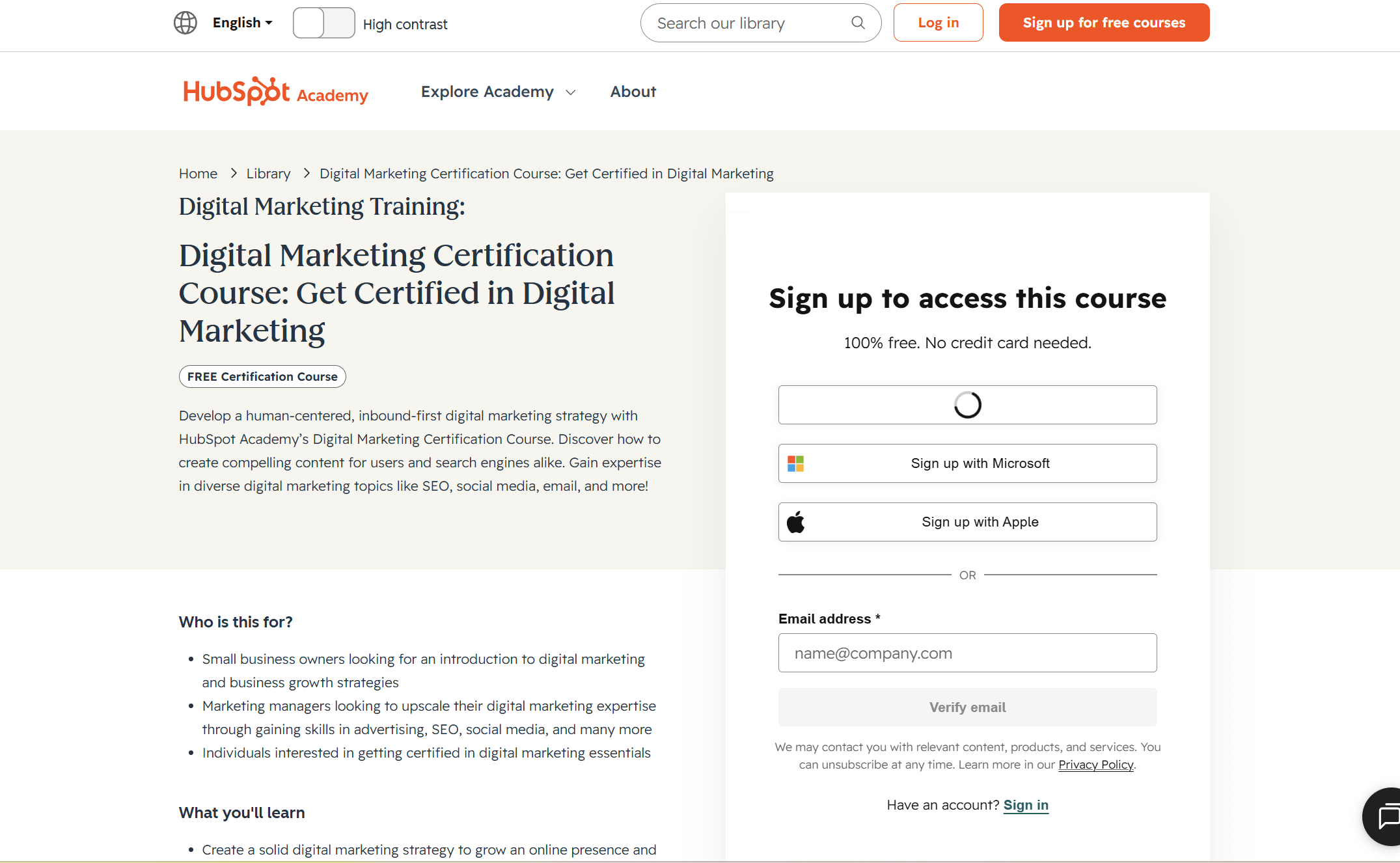
HubSpot Academy — Social Media Marketing Certification is a free, self-paced course covering content strategy, platform best practices, and how to measure results.
When you finish, you get a certificate you can add to your Upwork or Fiverr profile — which tells a client you know what you’re doing, even before your first client ever does.
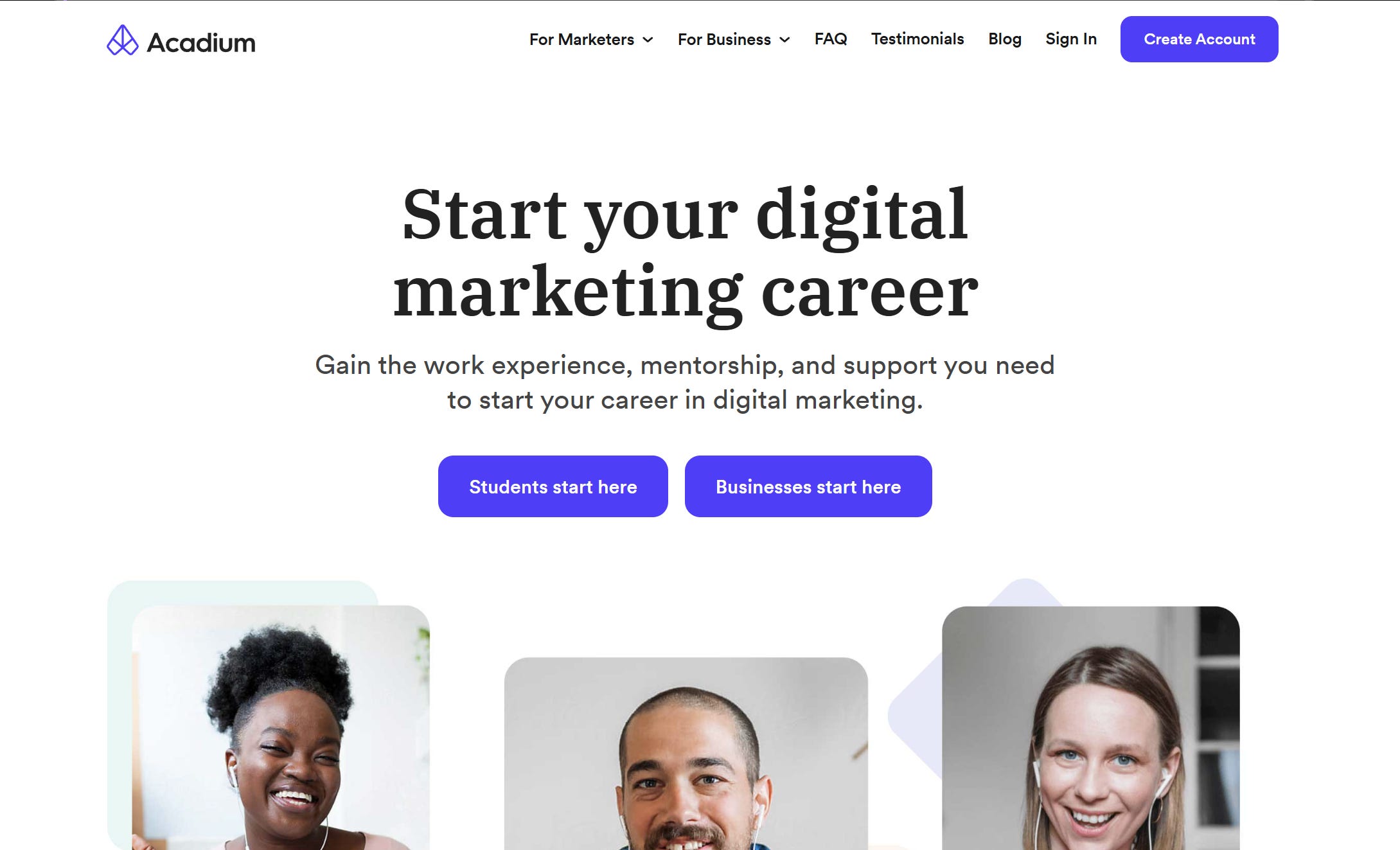
Acadium takes it one step further. It has free courses on social media marketing, but the real gem is the apprenticeship programme. You get matched with a real business, do real social media work for them over 3 months, and get mentored along the way.
When you’re done, you have actual work experience and a real portfolio piece — not a sample you made up, but work a real business used. That’s the kind of proof that gets you hired.
Both are completely free to start. Either one gives you something real to point to when a client asks what you’ve done.
Your Next Step
This week, pick one local business you already like.
A coffee shop. Your kids’ swim school. A boutique you follow online. Look at their last 10 posts.
If you could do it better — or if they haven’t posted in two weeks — reach out. Keep your message short: “I help small businesses stay active on social media. I’d love to offer you a trial month so you can see how it works.”
No portfolio required. No website required. No experience required — just the willingness to start.
Reply and let me know who you’re going to reach out to. I read every single reply.
Thanks for the info.