

I have two graduate qualifications. Not one client has ever asked to see either of them.
I’m saying that plainly because I want you to hear it from someone who has the paperwork sitting in a drawer: in this kind of work, the paperwork is not the gate.
Something else is.
The standard advice is get qualified first, then apply. For almost everyone reading this, I think that’s backwards. Here’s why.
Clients buy outcomes, not credentials
An employer filling a permanent role uses a degree as a filter, because they have 200 applicants and twenty minutes. A small business owner hiring help has one specific problem this week and wants it gone by Friday.
They don’t ask what you studied. They ask whether you can sort the inbox, write the email, reconcile the account. Show them you can and the credential question never comes up.
A work sample beats a certificate every time
Put a person with a diploma and no examples next to a person with no diploma and three relevant samples. The second one gets hired. Every time.
Which is good news, because a sample takes an afternoon and a diploma takes years.
“Get qualified first” keeps you spending
Notice who benefits from that advice. Every course telling you you’re not ready yet is selling readiness. Some courses are genuinely worth the money — I’ve paid for ones I’d recommend to you. But the order matters: earn first, then spend some of what you earned on getting better.
Money toward you, before money away from you. Same rule as Monday, wearing a different outfit.
What to do instead
• Name the thing you can already do. Not “I’m organised”. Something like: “I can take a messy inbox to zero and keep it there.”
• Make one piece of proof this week. A document, a sample, a before-and-after. One is enough to start.
• Apply before you feel ready. You will not feel ready. Readiness turns up after the third client, never before the first.
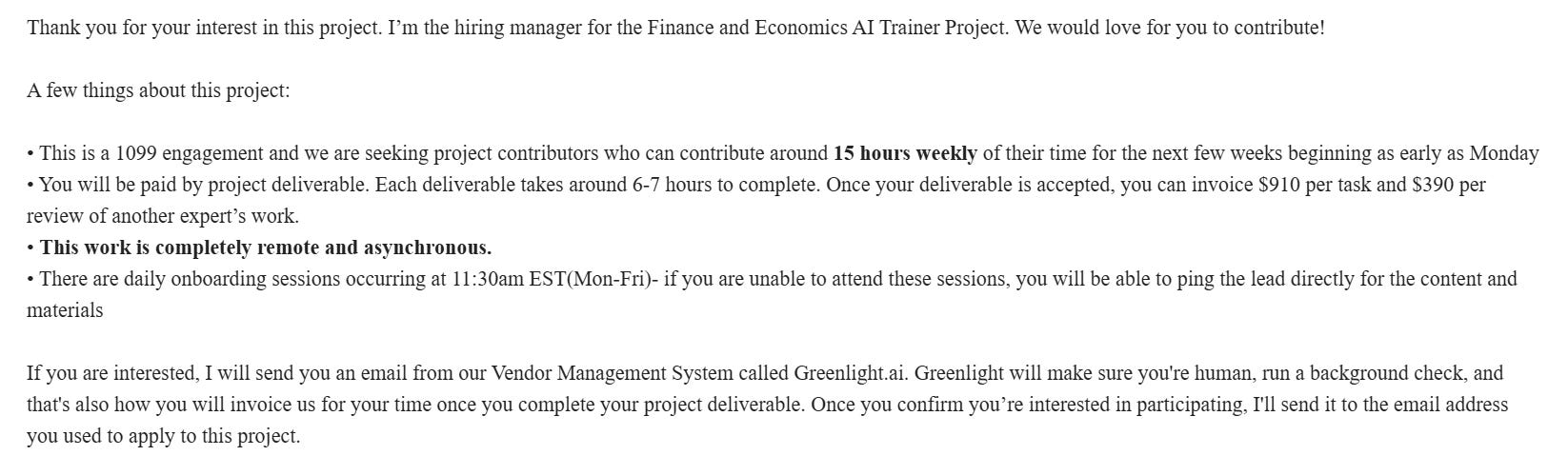
The moment this landed for me wasn’t a job I applied for. It was an invitation that arrived in my LinkedIn inbox for paid specialist work — because I’d spent an evening rewriting my profile to say plainly what I know, instead of listing where I’d been. They sent me an inbox to apply where I answered interview questions. And that was it…..
One caveat, because I promised you honesty.
There are fields where the certificate genuinely is required — regulated bookkeeping in some countries, anything medical, anything legal. If that’s where you’re headed, get the qualification.
For everything else I’ll write about this month, you don’t need one.
The one thing to do this week
Write a single sentence that says what you can already do. Reply and send it to me. If it sounds like a personality trait rather than a service, I’ll help you sharpen it — that’s a genuinely useful five minutes and it costs you nothing.
The question changes each time. The doubt underneath it doesn't. Here's what actually gets asked..
What jobs pay well without a degree?
Of the online ones, bookkeeping and specialized admin pay best relative to how hard they are to get into. Writing and virtual assistance start lower but climb faster once you specialize. Be wary of anything advertising very high pay with no requirements at all — that combination is the signature of a scam, not an opportunity.
Does it matter that my degree is from another country?
For freelance and contract work, almost never — the client is buying the work, not validating the institution. It matters far more for permanent employment. If you’re deciding where to spend your energy, put it into samples rather than into getting a qualification recognized.
I’ve been out of work for years. Does that count against me?
For freelance work there’s no gap to explain — there’s only what you can do now. That’s one of the real advantages of contract work over employment, and it’s worth knowing before you spend three weeks agonizing over a CV nobody is going to ask for.
If this landed for you, the most useful thing you can do with it isn’t share it widely — it’s send it to one mom. The one who’s been sitting on a “someday” instead of a Tuesday. She doesn’t need the whole newsletter, just this post.
And if you’re reading this because someone forwarded it to you: subscribe. Not because you’ll miss something if you don’t, but because next time you won’t have to wait for a friend to remember to send it.